
Dental implants: what to expect before, during and after placement
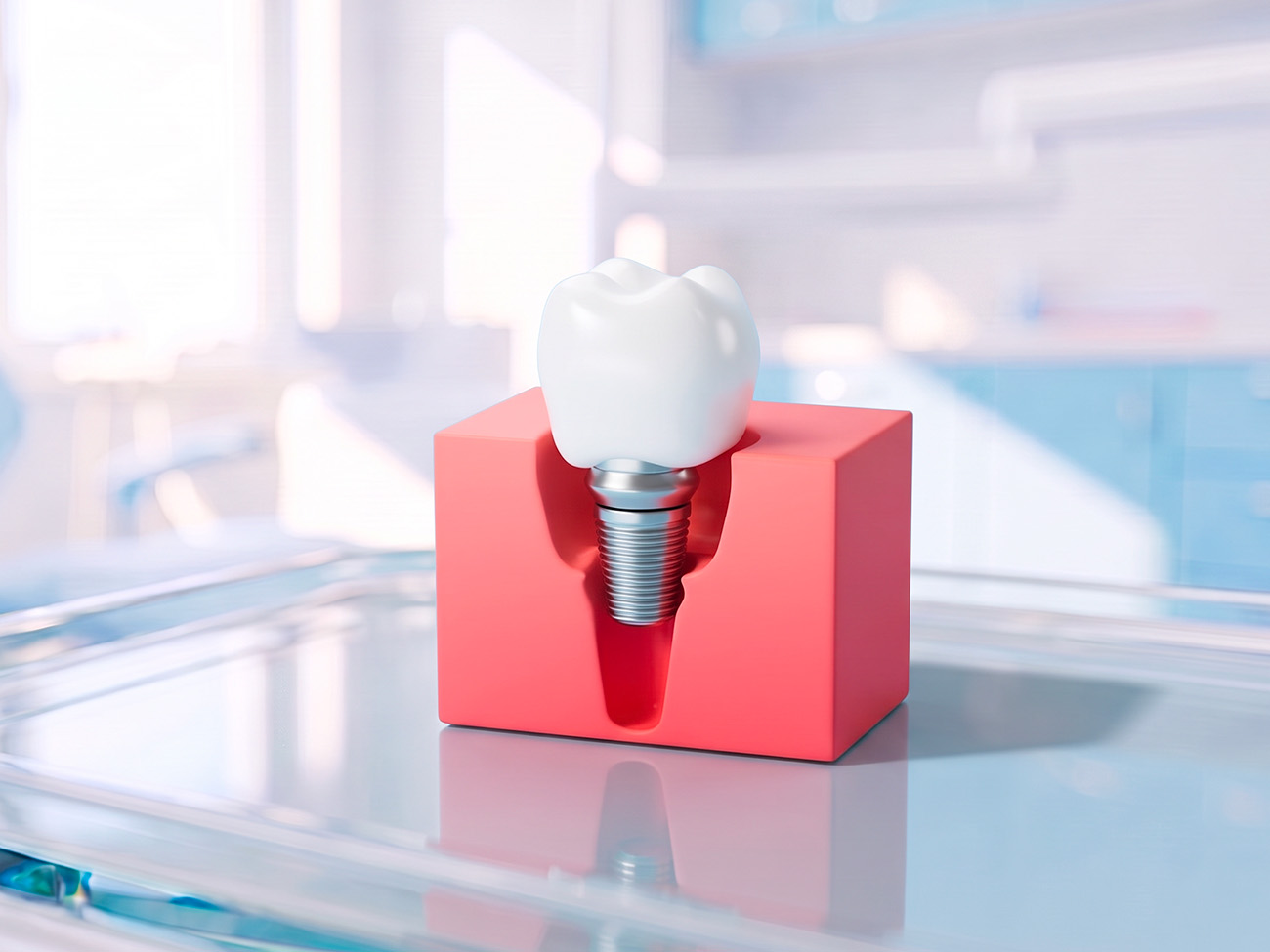
A dental implant replaces the root of a missing tooth and, once healed, provides a stable foundation for a dental crown. Unlike a traditional bridge, replacing a single tooth with an implant usually does not require neighbouring healthy teeth to be filed down. Modern implant dentistry offers a highly reliable way to replace missing teeth, but careful planning, suitable conditions and proper long-term care are essential for success.
Implant planning: we start with 3D diagnostics
At Stomatologické centrum Anděl, we plan implant treatment using 3D X-ray imaging (CBCT). This allows us to assess the amount and shape of the available bone as well as important anatomical structures, such as the course of the nerve in the lower jaw or the relationship between the planned implant and the maxillary sinus.
Based on the examination, we determine the appropriate position and dimensions of the implant and plan the entire treatment process. Even before the procedure, we therefore know where we intend to place the implant and whether the site provides suitable conditions.
The overall condition of your mouth is equally important. Active gum or periodontal inflammation, inadequate oral hygiene or other dental problems usually need to be addressed first. If there is insufficient bone at the implant site, bone augmentation may be possible in some cases.
Before treatment begins, we will discuss the individual steps with you, including the expected timeline and cost. This means you will know in advance what to expect throughout your treatment.
How is a dental implant placed?
The placement of a single dental implant is usually performed under local anaesthesia. The dentist prepares a precisely shaped site in the bone and places the implant into it.
A straightforward single implant placement may take approximately 30 to 60 minutes. However, the duration varies depending on the individual situation – for example, placing several implants or performing bone augmentation at the same time may require a longer procedure.
After placement, a process called osseointegration begins. During this process, a strong connection develops between the surface of the implant and the surrounding bone. This stable integration with the bone provides the foundation for subsequently restoring the implant with a crown.
After the procedure, we will give you clear instructions on how to care for the area, how to clean your teeth, what to eat and when to return for a check-up.
What should I expect after implant placement?
Some swelling, tenderness or mild pain may occur after the procedure. The intensity varies depending on the extent of the treatment and your individual response.
After a straightforward single implant placement, many patients return to their normal activities relatively quickly. A more extensive procedure or bone augmentation may require a longer recovery period. Physical exertion and sports should generally be limited during the first few days, according to your dentist's recommendations.
If you experience significant or increasing pain, unusual swelling, bleeding or any other concerns following the procedure, you should contact us.
When will I receive my final crown?
Healing time varies from patient to patient. Depending on the quality of the bone, the stability of the implant, its location and whether bone augmentation was required, osseointegration may take several months.
In some cases, we can provide a temporary restoration on the day of implant placement or shortly afterwards. This can be particularly important in the visible front area of the mouth, where we want to avoid leaving the patient with a noticeable gap while the implant heals.
Once sufficient healing has taken place, the restorative phase begins and the final crown is made. We match the colour and shape of the crown to the surrounding teeth so that the final restoration looks as natural as possible.
How long does a dental implant last?
Dental implants are designed as a long-term solution, but their lifespan cannot be guaranteed in advance. The outcome is influenced by the quality and quantity of bone, gum health, general health, smoking, the forces placed on the implant and, above all, long-term oral hygiene and regular check-ups.
Just like natural teeth, implants can accumulate biofilm and develop inflammation in the surrounding tissues. Inflammation limited to the soft tissues around an implant is known as peri-implant mucositis. If this progresses to include loss of the supporting bone, it is referred to as peri-implantitis.
For this reason, daily home care and regular professional dental hygiene are both essential. We recommend an individual recall interval based on your risk factors and the condition of the tissues around the implant.
At our clinic, we use the GBT protocol and AIRFLOW® technology during dental hygiene appointments, allowing biofilm to be removed gently around dental implants as well.
Who is suitable for dental implants?
Dental implants can be a suitable solution for many adult patients once jaw growth has been completed. Before implant placement, we always assess the condition of the bone and gums, oral hygiene, general health and any relevant risk factors.
Particular attention is required in patients with active periodontitis, poorly controlled diabetes or heavy smoking habits. These factors do not necessarily rule out implant treatment, but they may increase the risk of complications and affect the treatment plan.
Insufficient bone does not automatically mean that implant treatment is impossible either. Depending on the individual situation, bone augmentation may be possible, or an alternative treatment approach may be recommended.
Is a dental implant right for you?
This can only be determined reliably after an examination. During an implant consultation, we assess your teeth and gums, the available bone and your overall dental situation, and explain the available treatment options.
If an implant is a suitable solution, we will prepare a treatment plan outlining the individual stages, expected timeline and cost. This means you will know what to expect before treatment begins.