
Teeth whitening: how to achieve a brighter smile safely
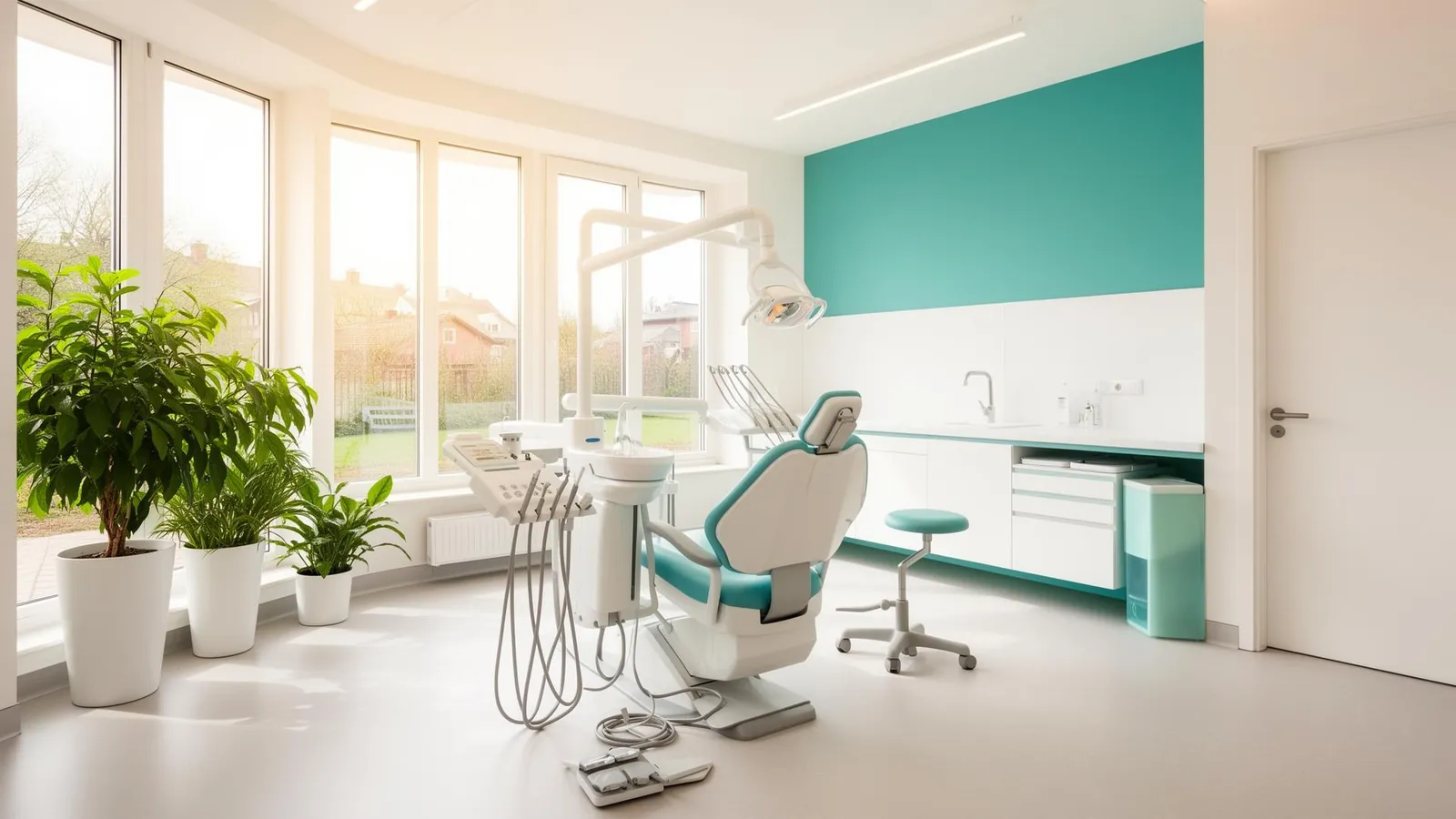
Professional teeth whitening can lighten the natural colour of your teeth without drilling or mechanically altering their structure. At Stomatologické centrum Anděl, we use the PureWhitening system, which combines at-home and in-office whitening according to a precisely defined protocol. The aim is not simply a quick result after a single appointment, but an even result that can be maintained over the long term.
Why do teeth become darker?
Everyone has a different natural tooth colour, with genetics playing an important role. However, the shade of our teeth also changes throughout life.
Surface stains can accumulate as a result of coffee, tea, red wine or smoking. Many of these stains can be removed during professional dental hygiene. This is not true whitening, however – dental hygiene removes accumulated surface staining but does not change the natural colour of enamel and dentine.
The colour of teeth also changes internally. As we age, changes in enamel and dentine can gradually make teeth appear darker. Certain medications, trauma and developmental changes in dental tissues can also affect tooth colour.
When we want to lighten the natural colour of the tooth itself, peroxide-based whitening is used.
How does teeth whitening work?
Whitening gels contain a peroxide-based active ingredient that penetrates the dental tissues and chemically alters the molecules responsible for discolouration.
Professional whitening therefore does not involve drilling or mechanically removing tooth structure. When correctly indicated and performed using established products according to the recommended protocol, it is a well-studied method of aesthetic dentistry.
Before whitening begins, we check the health of your teeth and gums. Active decay, leaking restorations or gum inflammation should generally be treated before starting the whitening process.
Why do we use PureWhitening?
At Stomatologické centrum Anděl, we use the PureWhitening system, which combines at-home whitening in custom-made trays with an in-office stage.
It is therefore not simply a one-off intensive whitening session at the dental practice. The teeth are gradually lightened over several weeks according to a carefully defined protocol.
Custom-made trays fit the teeth precisely, allowing the whitening gel to be applied in a controlled manner. The trays can also be used after the initial treatment to maintain the achieved shade in the future.
How does PureWhitening work?
First, accurate impressions or records of your teeth are taken so that individual whitening trays can be made.
The first stage takes place at home. Under the standard PureWhitening protocol, 10% carbamide peroxide gel is used overnight during the first week, followed by 16% carbamide peroxide gel during the second week.
This is followed by the in-office stage. A 6% hydrogen peroxide gel is applied at the practice in three 15-minute cycles.
From the following day, the patient continues at home with daytime whitening using 6% hydrogen peroxide. The trays are worn for approximately 1–2 hours a day until the prescribed course has been completed.
The exact procedure can always be adjusted according to the condition of your teeth and how they respond during treatment.
Why isn't one in-office appointment enough?
Immediately after intensive in-office whitening, teeth can appear particularly bright partly because of temporary dehydration. Some of this immediate effect diminishes as the teeth rehydrate.
For this reason, PureWhitening does not rely solely on a single in-office application. The at-home stages provide a longer period of exposure to the whitening agents, while the combined protocol allows the final shade to develop gradually and evenly.
The aim is not to make the teeth as white as possible within a single hour, but to achieve controlled and even whitening.
Is teeth whitening safe?
Professional peroxide-based whitening is considered a safe and well-established treatment when correctly indicated and used according to the recommended protocol.
The most common side effect is temporary tooth sensitivity. Some patients experience no sensitivity at all, while others may notice it during the active whitening period. It is generally temporary and resolves after the application is adjusted or stopped.
Temporary gum irritation can also occur, for example if whitening gel comes into contact with the gums.
One of the advantages of professionally supervised whitening is that the protocol can be adjusted according to how your teeth respond – for example, by changing the application time or temporarily pausing treatment.
Will fillings, crowns and veneers become whiter?
No. Whitening changes the colour of natural dental tissues, not ceramic or composite restorations.
Crowns, veneers and tooth-coloured fillings therefore retain their original shade. This is particularly important when restorations are present in the visible front teeth.
If you are planning a new crown, veneer or aesthetic filling and are also considering whitening, it is generally advisable to whiten the natural teeth first and select the final shade of the new restoration afterwards.
How long do the results last?
Your teeth will not return to their original shade within a few days after whitening is completed. However, their colour can gradually change over time due to diet, smoking, natural ageing and other factors.
One of the major advantages of custom-made trays is that the achieved shade can be maintained relatively easily. PureWhitening recommends brief periodic maintenance applications using the same at-home trays.
This means that it is usually unnecessary to repeat the entire whitening process from the beginning.
Do I need to follow a "white diet" during whitening?
Patients often ask whether they need to stop drinking coffee, tea or red wine and eat only pale-coloured foods for several weeks.
Rather than following an extremely restrictive "white diet", the important factors are following the recommended whitening protocol and maintaining good oral hygiene. If certain foods or drinks cause significant surface staining, it is sensible to limit them and maintain normal oral hygiene after consuming them.
Is PureWhitening suitable for everyone?
Before recommending whitening, we assess the condition of your teeth, gums, fillings and any crowns or veneers. We also consider the cause of the discolouration and your expectations.
Not every type of tooth discolouration responds to whitening at the same rate. Some shades lighten very readily, while others may require a longer course of treatment.
This is why whitening should be planned individually, with a realistic understanding of the result that can be achieved in your particular case.
If you are considering teeth whitening, you can discuss it with us during your routine dental examination or dental hygiene appointment. We will assess your teeth, explain the available options and recommend a suitable approach.